
Heel Spurs Adelaide
A heel spur is one of the most common — and most misunderstood — findings in podiatry. It often turns up on an X-ray taken for unrelated reasons, and it’s frequently named as the cause of heel pain when it isn’t. At Adelaide Podiatry Centres, heel spurs come up regularly in general podiatry consultations, alongside everything else we manage: from diabetic foot care to children’s feet to nail and skin conditions.
This page covers what a heel spur actually is, where it sits within the bigger picture of foot health, and what we do about it when it matters.
What a heel spur actually is
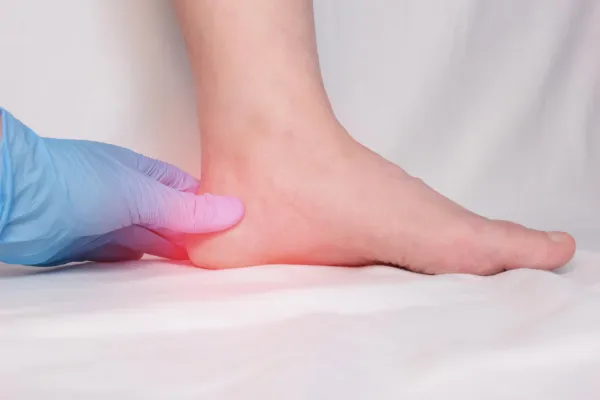
A heel spur is a small calcium deposit that builds up on the underside of the heel bone, usually at the point where the plantar fascia anchors in. It forms slowly, over months or years, in response to repeated tugging at that attachment. Think of it as the body’s way of reinforcing an area under chronic load — not unlike how a callus forms on skin that’s constantly rubbed.
Spurs can also form at the back of the heel where the Achilles tendon attaches, though this is less common and tends to behave differently.
What heel spurs are not: sharp, knife-like protrusions stabbing into your foot. The name is unfortunate. On X-ray they can look pointed and aggressive, but in reality they sit within soft tissue and most are completely silent.
How common are heel spurs?
More common than you’d think. Estimates from radiographic studies put the prevalence in the general adult population at somewhere between 10% and 20%, rising with age. Plenty of people we image for unrelated reasons — ankle injuries, suspected stress fractures, even routine pre-surgical screening — turn out to have a heel spur they never knew about and never felt.
This is the single most important thing to understand about heel spurs: their presence on imaging is not the same as a diagnosis. A spur is a finding. Whether it’s clinically relevant depends entirely on what else is going on in the foot.
When heel spurs are linked to pain
When patients do experience pain in the area of a heel spur, the cause is almost always the surrounding soft tissue — specifically, degenerative changes in the plantar fascia known as plantar fasciitis. The spur and the soft tissue problem share a root cause (excess strain at the fascial attachment), which is why they’re so often found together.
How heel spurs are diagnosed
Heel spurs are diagnosed on imaging — typically a standard lateral X-ray of the foot. Ultrasound and MRI can show them too, but X-ray is the usual route. The spur itself is straightforward to identify.
What requires more care is the clinical interpretation. A good podiatric assessment looks at:
- Where the pain actually is, and what reproduces it
- The condition of the plantar fascia (thickening, tenderness, stiffness)
- Foot posture, arch mechanics, and gait pattern
- Calf muscle flexibility and ankle range
- Footwear and activity load
- General foot health, including circulation, sensation, and skin integrity
The X-ray finding becomes one piece of a larger puzzle. In many cases, the heel spur turns out to be a coincidental finding rather than the source of symptoms.

How we approach heel spurs at Adelaide Podiatry Centres
Our approach depends on what the assessment reveals:
If the spur is incidental — found on imaging but not linked to current symptoms — no treatment is needed. We’ll usually explain the finding, check for any contributing biomechanical factors, and leave it at that. Heel spurs do not need to be removed simply because they exist.
If the spur is associated with active heel pain — the more common scenario — treatment targets the soft tissue. Options we may use include footwear review and recommendations, taping and strapping techniques to offload the plantar fascia, custom orthotics where mechanical drivers are present, stretching and strengthening programs, shockwave therapy, dry needling, and foot mobilisation. Surgery is very rarely required.
If you have other foot health concerns — diabetic risk, skin and nail conditions, kids’ feet, ingrown toenails, sports injuries — we manage those at the same appointment. One of the advantages of being seen at a general podiatry practice is that heel pain rarely exists in isolation, and we can address everything together.
When to book an appointment
You should consider seeing a podiatrist if:
- You’ve been told you have a heel spur and want to understand what it means
- You have heel pain that’s lasted more than a couple of weeks
- Pain is changing your walking pattern or limiting activity
- You’ve tried over-the-counter insoles or stretching without lasting improvement
- You have other foot health risk factors, such as diabetes, that make heel pain more concerning
A general podiatry consultation gives you a full assessment and a clear plan — whether that’s reassurance, conservative management here, or referral on for specialist heel care.
Gap Free Heel Pain Assessments*
We offer a GAP FREE ASSESSMENT* for heel pain under your health insurance.
Please watch the below video to find out the Truth About Heel Spurs:

Ultimate 7 Step Checklist to Heal Your Morning Heel Pain

Ultimate 7 Step Checklist to Heal Your Morning Heel Pain

Book Online in less than 60 Seconds
Easily book an appointment at Adelaide Podiatry Centres in less than 60 seconds by selecting a location, practitioner, date and time from our online booking portal. Same day appointments are available.